








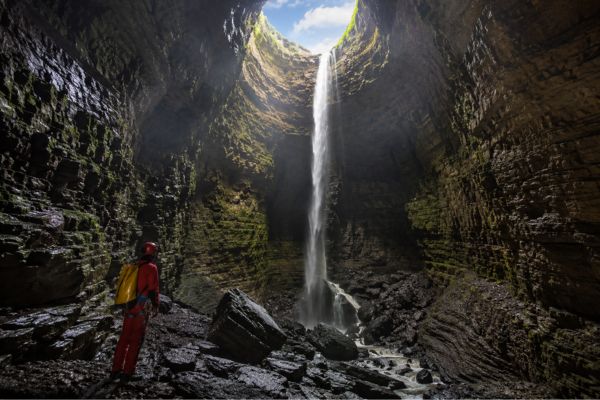
Gaping Gill is one of the most remarkable natural wonders in the United Kingdom. Hidden beneath the limestone landscape of the Yorkshire Dales, this enormous cave system has fascinated explorers, geologists, photographers, and adventure enthusiasts for more than a century. Best known for its dramatic vertical shaft and spectacular underground waterfall, Gaping Gill offers a unique combination of natural beauty, scientific importance, and historical significance. Whether you are interested in geology, outdoor adventure, or Britain’s hidden landscapes, this extraordinary cave deserves a place on your travel list.
Table of Contents
ToggleWhat Is Gaping Gill?
Gaping Gill, sometimes spelled Gaping Ghyll, is a massive limestone cave located on the southern slopes of Ingleborough in North Yorkshire, England. It is one of Britain’s best-known potholes and forms part of an extensive underground cave network shaped by thousands of years of flowing water. The cave attracts visitors from around the world because of its impressive geological features and fascinating exploration history.
The cave is famous for its enormous entrance shaft, where the Fell Beck stream disappears underground. Water plunges nearly 100 meters into one of the country’s largest underground chambers, creating an unforgettable natural spectacle. This combination of size, depth, and geological beauty has made Gaping Gill one of the UK’s most celebrated cave systems.
The Geological Formation of Gaping Gill
Gaping Gill owes its existence to millions of years of natural erosion. Rainwater absorbed carbon dioxide from the atmosphere and soil, creating a weak acid that slowly dissolved the Carboniferous limestone beneath the Yorkshire Dales. Over countless generations, underground passages widened as flowing water carved increasingly complex tunnels through the rock.
Eventually, sections of the cave roof collapsed, forming the massive vertical shaft visible today. Meanwhile, the underground river continued expanding the network beneath the surface. The result is an impressive cave system stretching more than 21 kilometers, making it one of Britain’s largest and most scientifically valuable underground landscapes.
How the Underground Waterfall Was Created
One of Gaping Gill’s most famous features is the Fell Beck waterfall, which drops directly into the main chamber below. During periods of normal rainfall, the uninterrupted waterfall creates a dramatic display as water disappears into the darkness before continuing through underground passages.
Heavy rainfall can significantly increase the water flow, transforming the waterfall into a powerful torrent. This changing environment also demonstrates how active natural processes continue shaping the cave today, providing geologists with valuable insights into limestone erosion and cave development.
Why Gaping Gill Is Famous
Several features make Gaping Gill stand out among Britain’s natural attractions. First, its enormous entrance shaft reaches approximately 98 meters, making it one of the country’s deepest accessible potholes. The scale alone leaves visitors amazed as they look into the seemingly endless opening.
Equally impressive is the vast underground chamber below. Measuring roughly 129 meters long and more than 30 meters high, the chamber is large enough to accommodate an enormous building. Combined with the waterfall, towering limestone walls, and dramatic lighting conditions, the chamber creates one of Europe’s most breathtaking underground environments.
A Landmark for Cave Exploration
Gaping Gill also holds an important place in the history of cave exploration. During the nineteenth century, explorers attempted to reach the bottom using ropes and ladders, but the dangerous conditions prevented early success. Eventually, French explorer Édouard-Alfred Martel completed the first successful descent in 1895, marking a major milestone in British speleology.
Since then, generations of cave explorers have mapped new passages and expanded scientific understanding of the entire cave network. Modern technology has revealed connections with nearby cave systems, confirming that Gaping Gill forms part of a much larger underground landscape beneath the Yorkshire Dales.
Visiting Gaping Gill
Although experienced cavers regularly explore the cave system, Gaping Gill is not open for unrestricted public access throughout the year. Instead, visitors can experience the underground chamber during special public events organized by local caving clubs, typically around the May and August Bank Holidays.
During these events, participants descend into the cave using a large mechanical winch. The controlled descent allows visitors without advanced caving experience to safely witness one of Britain’s most extraordinary underground spaces. The opportunity is considered one of the UK’s most unique outdoor experiences and attracts thousands of visitors each year.
What Visitors Can Expect
Descending into Gaping Gill feels unlike any ordinary sightseeing experience. As the winch slowly lowers visitors through the massive shaft, the scale of the cave becomes increasingly apparent. Once inside the main chamber, towering limestone walls and the sound of rushing water create an unforgettable atmosphere that photographs cannot fully capture.
Temperatures inside the cave remain cool throughout the year, while the damp environment requires appropriate clothing and sturdy footwear. Although the descent is carefully supervised, visitors should be comfortable with heights and confined natural spaces before participating in the experience.
Wildlife and Environmental Importance
Beyond its visual appeal, Gaping Gill supports a unique underground ecosystem. Although sunlight never reaches much of the cave, specialized microorganisms and cave-adapted invertebrates survive within the dark environment. Scientists continue studying these fragile ecosystems to better understand how life adapts to extreme underground conditions.
The surrounding Yorkshire Dales landscape also contributes significantly to regional biodiversity. Limestone grasslands, streams, and upland habitats support a variety of plants, birds, and mammals. Protecting Gaping Gill therefore benefits both geological heritage and the wider natural environment that surrounds this remarkable cave system.
Safety and Conservation
Gaping Gill presents genuine hazards for anyone attempting unauthorized exploration. Steep drops, fast-moving water, narrow passages, and changing weather conditions create serious risks even for experienced cavers. Consequently, access is carefully managed to protect both visitors and the cave itself.
Conservation remains equally important because underground environments recover very slowly from human damage. Responsible visitors follow designated routes, avoid disturbing natural formations, and respect the guidance provided by experienced cave organizations. These practices help preserve the cave for future generations while supporting ongoing scientific research.
Practical Tips Before Your Visit
Planning ahead greatly improves the overall experience. Public winch events often attract large crowds, so arriving early increases the likelihood of securing a place. Visitors should also monitor weather conditions because heavy rainfall occasionally affects access or operational safety.
Comfortable outdoor clothing, waterproof layers, sturdy walking shoes, and warm garments provide the best preparation for changing conditions. Finally, bringing a camera with suitable low-light capabilities allows visitors to capture memorable images while respecting any photography guidelines provided during the event.
Gaping Gill’s Lasting Legacy
Gaping Gill represents far more than an impressive geological feature. It has inspired generations of explorers, contributed to scientific discoveries, and encouraged greater public appreciation of Britain’s underground landscapes. Its combination of natural beauty, historical significance, and ongoing geological activity continues attracting researchers alongside adventure seekers.
Modern mapping technology has expanded our understanding of the cave, yet many passages remain challenging to explore completely. This continuing sense of discovery keeps Gaping Gill relevant within both scientific communities and outdoor recreation, ensuring its place among Britain’s most treasured natural landmarks.
Conclusion
Gaping Gill stands as one of the United Kingdom’s greatest geological treasures, combining dramatic scenery with exceptional scientific importance. From its towering entrance shaft and spectacular underground waterfall to its rich exploration history and carefully protected environment, every aspect of the cave reflects the remarkable power of nature over millions of years. Whether you visit during a public descent or simply appreciate its fascinating story, Gaping Gill remains an unforgettable example of Britain’s extraordinary natural heritage and a destination that continues to inspire curiosity, adventure, and respect for the underground world.